
Payara aka Vampire Fish
The Amazon’s Vampire Fish
Payara aka Vampire Fish
The Amazon’s Vampire Fish
Guide
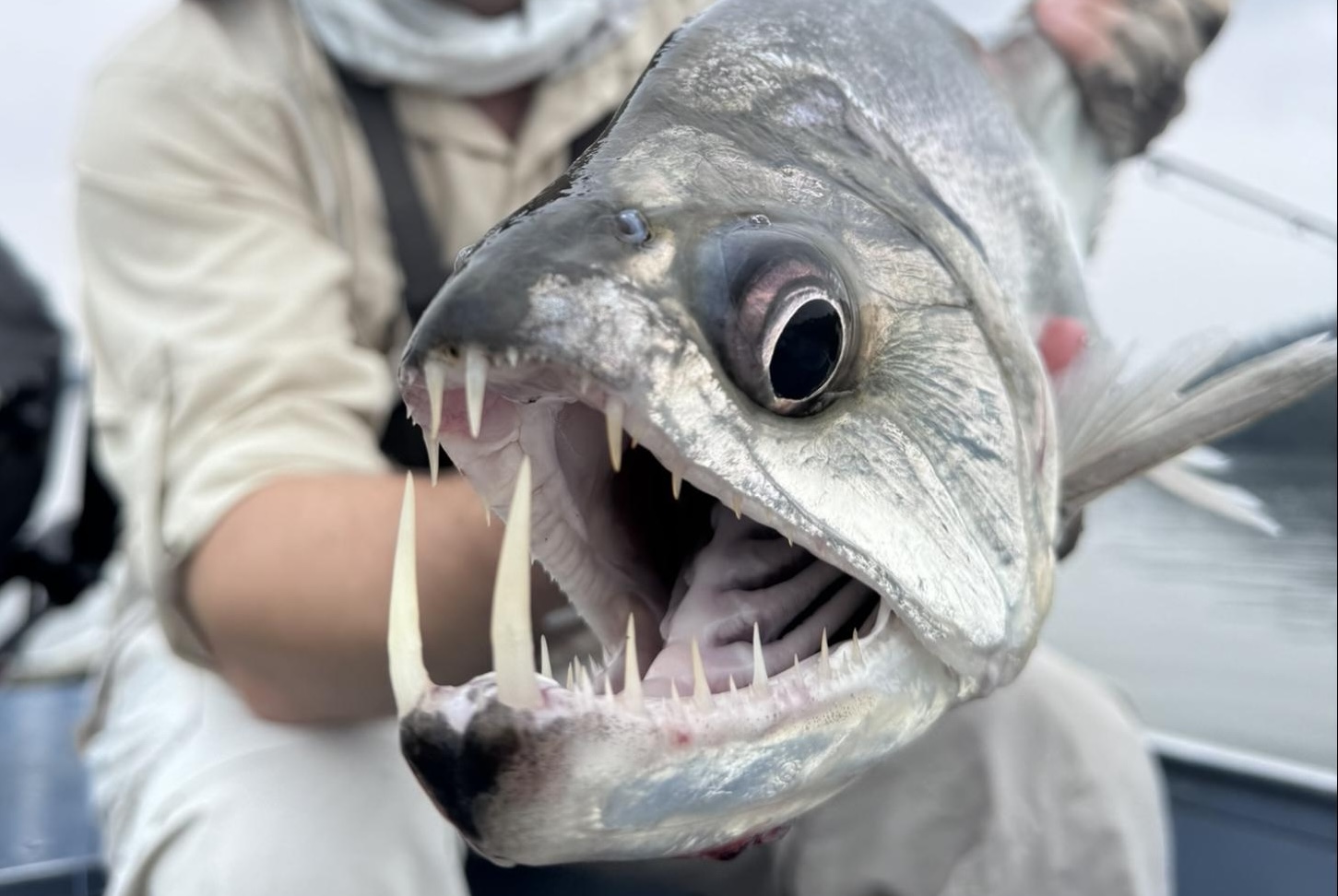
Payara are among the most iconic, ferocious, and electrifying gamefish in the Amazon Basin. Known for their long vampire-like fangs, explosive strikes, and aerial battles, they’ve earned the nickname “vampire fish”—and they live up to the legend. These toothy predators roam turbulent rapids and deep current seams in pursuit of baitfish, slashing with incredible speed and violence. With their streamlined bodies and signature underbites, payara are one of the most distinctive—and challenging—targets for serious anglers fishing in South America.
Three different species are commonly grouped under the “payara” name:
Hydrolycus armatus — Silver Payara — the largest and most powerful, often exceeding 30 pounds
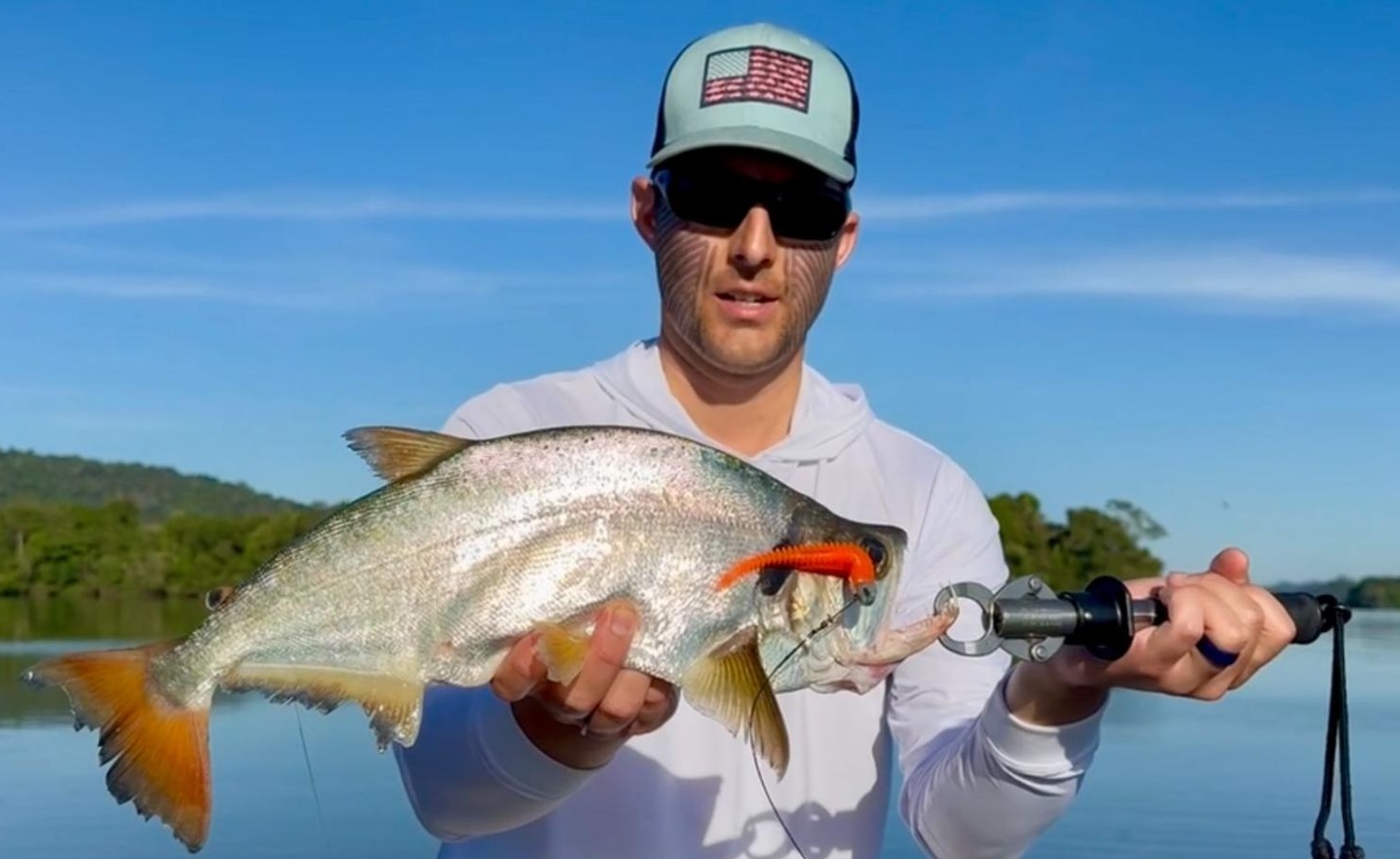
Hydrolycus tatauaia — Orange-Tail Payara — smaller and more colorful, known for acrobatics and speed
Rhaphiodon vulpinus — Machete Payara the — more elusive with a sleek build and saber-shaped snout
Though they inhabit overlapping regions, each species prefers slightly different habitats and offers its own angling appeal. Payara are prized by those seeking adrenaline-packed fights, trophy photo opportunities, and the satisfaction of taming one of the Amazon’s most dangerous-looking predators.
Interesting Facts & Notes
Hydrolycus species use their long fangs to impale prey fish in mid-water; their upper jaws have fang sheaths that lock the teeth in place.
H. armatus can grow over 40 inches long and weigh up to 40 lbs, while H. tatauaia maxes out closer to 10 lbs—but is faster and more agile.
Rhaphiodon vulpinus (machete payara) lacks the exaggerated fangs of Hydrolycus but is just as fast, with blade-like jaws and a tendency to leap.
All three are pure piscivores that rely on high oxygen levels, fast water, and open space to hunt effectively.
Where to Catch Payara
Payara are caught on the following Acute Angling multi-species trips:
Xingu River — All three species, especially Hydrolycus armatus in rocky rapids and swift channels
Rio Aripuanã— H. tatauaia and R. vulpinus in clearwater current seams and deep back channels
Quick Facts
| Attribute | Description |
|---|---|
| Scientific Names | Hydrolycus armatus, Hydrolycus tatauaia, Rhaphiodon vulpinus |
| Common Names | Payara, Vampire Fish, Cachorra, Machete Payara, Cachorra-larga |
| Size Range | H. armatus: 10–40 lbs; H. tatauaia: 2–10 lbs; R. vulpinus: 1–6 lbs |
| Region | Amazon Basin, Tocantins-Araguaia, Orinoco, Guianas |
| Habitat | Rapids, eddies, deep channels, current seams |
| Behavior | Aggressive ambush predator; mobile and territorial |
| Coloration | Silvery body with dark shading, large eyes; H. tatauaia shows orange fins |
| Aggression | Extremely high; reacts to flash and fast retrieves |
| Feeding Habits | Strict piscivores – feed primarily on baitfish |
| Gamefish Status | Elite — spectacular strikes and difficult to land |
Physical Appearance
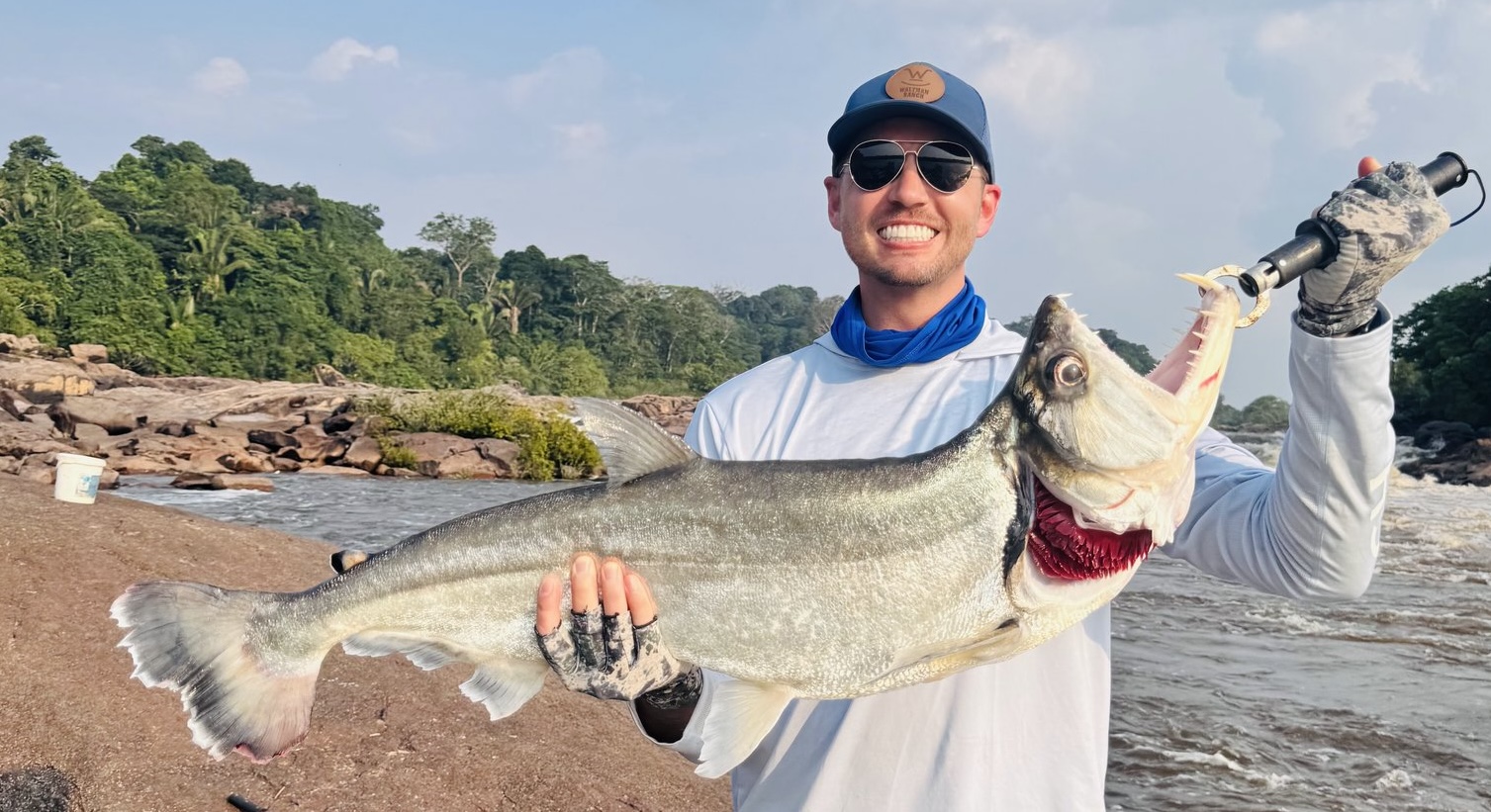
All payara species share a streamlined, torpedo-shaped profile built for life in fast current. The Silver Payara has the deepest body and a broad, bullish head, often with black-edged fins and a slightly arched back. The Orange-tail Payara is more tapered, with pronounced orange or reddish fin tips and a dark shoulder mark behind the gill plate. The Machete Payara has a slimmer, blade-like snout and an iridescent silver body that turns pinkish when excited.
How to Identify the Different Payara
| Feature | Silver Payara | Orange-tail Payara | Machete Payara |
|---|---|---|---|
| Max Size | 30–40 lbs | 6–10 lbs | 3–6 lbs |
| Body Shape | Deep, stocky | Slender, streamlined | Very slim, saber-shaped |
| Fangs | Long, visible, protruding upward | Shorter, still visible | Small canines, not externally visible |
| Fin Coloration | Gray to black-edged fins | Orange/red highlights on fins | Transparent to faintly reddish |
| Opercular Mark | None or faint | Prominent dark blotch | None |
| Preferred Habitat | Deep rapids and strong current | Current seams and backwaters | Mid-depth channels and quiet eddies |
Fishing Tactics: How to Catch Vampire Fish
Catching payara is not just about the strike—it’s about staying connected through the chaos. These fish are notorious for leaping out of the water the moment they're hooked, shaking their heads violently and often throwing the lure. Their bony mouths make hookups tricky, and their ability to surge with current demands strong gear and steady nerves.
Recommended Techniques
Cast spoons, stickbaits, or diving plugs into eddies and fast seams—retrieve quickly and erratically.
Use live baitfish drifted downstream along rocky ledges and drop-offs.
Target the edges of whitewater, especially where currents split or slow.
Suggested Gear
Rod: Medium-heavy spinning or baitcasting; fly anglers use 8–10 wt rods with sinking tips
Line: 40–60 lb braided mainline with wire leader
Hooks: Heavy-duty trebles or singles; sharpen frequently
Extras: Boga grip, long pliers, and gloves—payara can injure careless hands
Related Reading
Payara in Action
Join the Adventure
Ready to chase vampire fish in their native Amazon waters? Let Acute Angling take you there. Our multi-species trips offer the rare chance to land multiple species of payara in one week of high-octane fishing.
Contact us today:
📞 (866) 832-2987
References
Zeinad, A. K. & Prado, R. A. (2012). Peixes fluviais do Brasil: espécies esportivas
Toledo-Piza, M., Menezes, N. A., & Santos, G. M. (1999). Hydrolycus taxonomy and species differentiation
Melo et al. (2005, 2009). Ecological studies on characins in the Tocantins-Araguaia basin
FishBase (2024). Hydrolycus spp. and Rhaphiodon vulpinus profiles. www.fishbase.org
Goulding, M. (1980). The Fishes and the Forest
Nature (2020). Occurrence data for Hydrolycus and Rhaphiodon
Sustenere Scientific Journal (2020). Distributional review of Amazonian dogtooth characins
Wiley Online Library (2023). Ecology and feeding behavior of Hydrolycus in South America
Larsen, L. (2021). Peacock Bass. Chapters on predators and baitfish
Acute Angling field data and guide observations


