
Wolf Fish
Fierce Amazonian predators with prehistoric power and shocking strikes
Wolf Fish
Fierce Amazonian predators with prehistoric power and shocking strikes
Guide
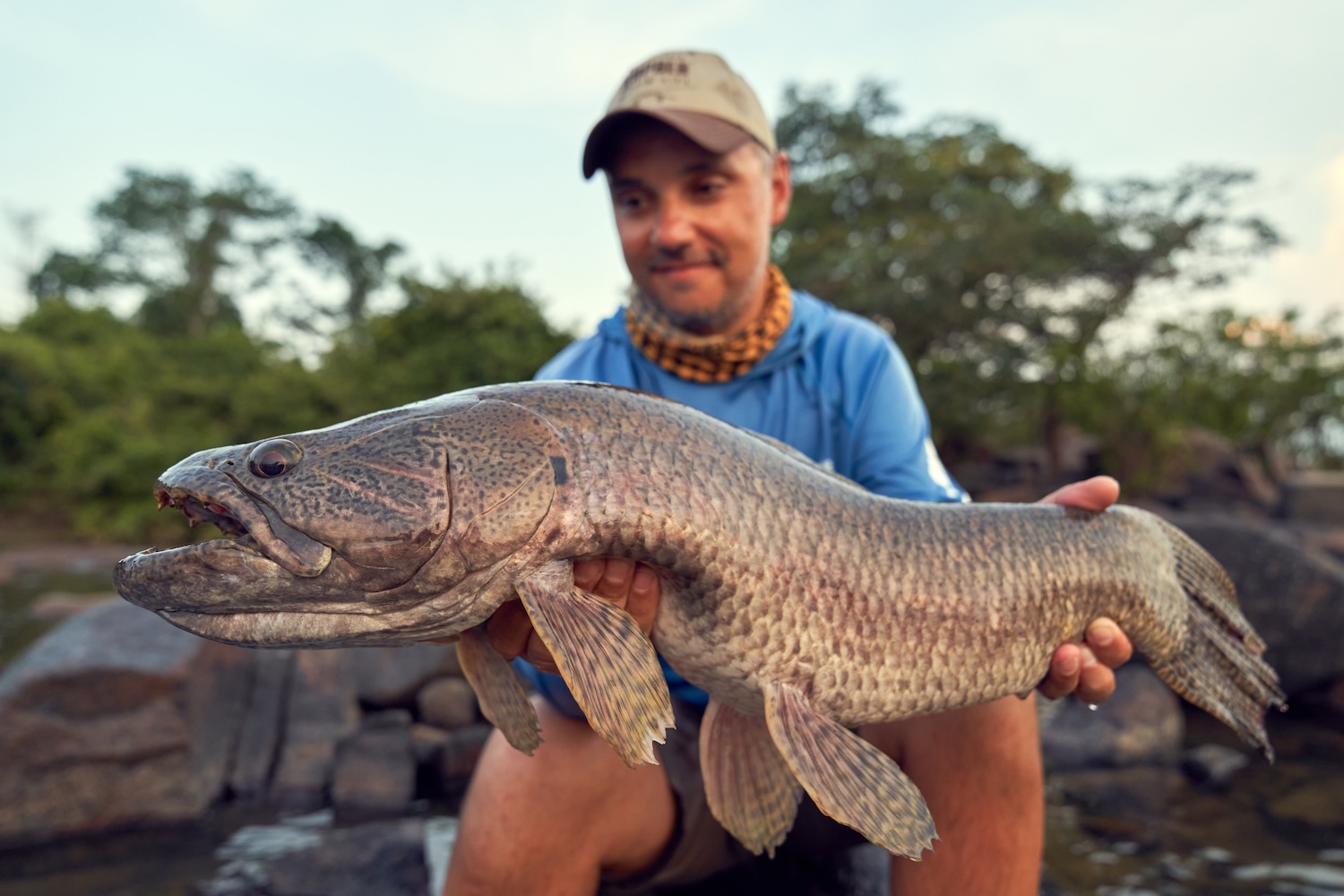
Although often lumped together under the nickname "wolf fish," the Amazon is home to two distinct species in the genus Hoplias: the smaller Hoplias malabaricus, known locally as the Traíra, and the much larger Hoplias aimara, or Trairão. Both species are aggressive ambush predators armed with savage teeth and terrifying strikes, but their size, habitat, and angling potential differ dramatically.
Traíra are commonly caught as a “bonus” while fishing for peacock bass, especially in Rio Negro tributaries and backwaters. Rarely exceeding 5 pounds, they’re nevertheless entertaining and pugnacious, often attacking topwater lures with reckless abandon. By contrast, the mighty trairão is a true apex predator, reaching over 30 pounds and inhabiting the rocky, swift-flowing rivers of the Amazon basin. They’re a top target for anglers seeking explosive, close-range strikes and heavy combat on stout tackle.
These fish offer a thrilling—and occasionally brutal—fishing experience. They’re not only formidable fighters but also a key part of the Amazon’s predatory food chain, exhibiting complex behaviors and unique adaptations that continue to fascinate scientists and anglers alike.
Interesting Facts & Notes
Trairões (H. aimara) are known to attack large prey, including frogs, birds, small mammals, and even other trairões.
The trairão has extremely low fecundity (about 60 eggs per female), and its reproduction is heavily tied to the wet season’s flood pulse.
The trairão’s jaw is packed with recurved, conical teeth capable of slicing flesh—extreme caution is required when handling.
Traíra are one of the most widespread freshwater species in South America, found from Argentina to the Amazon basin.
The trairão was once considered a strong candidate for aquaculture due to its size and meat quality, but its aggression and cannibalism limited success.
Where to Catch Wolf Fish
Trairão (H. aimara): Found in the clearwater rivers of the southern Amazon, such as the Xingu, Tapajós, and Iriri.
Traíra (H. malabaricus): Found throughout the Amazon basin but especially common in the Rio Negro and other blackwater systems where they’re often caught incidentally while peacock bass fishing.
Quick Facts
| Trait | Traíra (H. malabaricus) | Trairão (H. aimara) |
|---|---|---|
| Max Length | ~60 cm | >1 meter |
| Max Weight | ~3.6 kg (8 lbs) | >15 kg (33 lbs) |
| Habitat | Lentic/slow water | Creek mouths and slow, smaller tributaries that feed into rocky and higher gradient Amazon rivers |
| Diet | Fish, crustaceans | Fish, amphibians, mammals |
| Conservation | Not threatened | Not threatened |
| Peak Season | Dry season | Dry season |
Physical Appearance
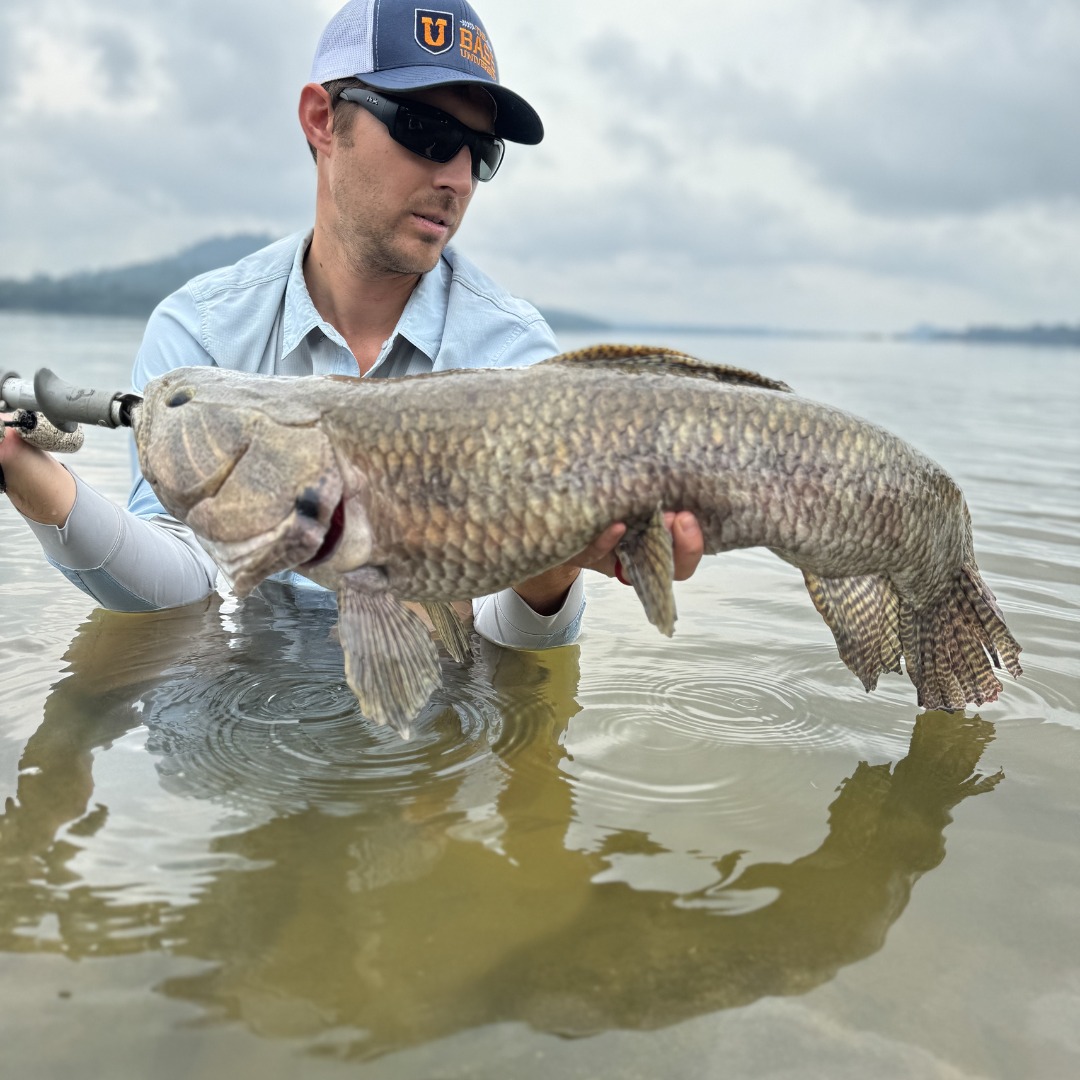
Both species share the classic wolf fish body shape: cylindrical, thick, and torpedo-like. The trairão is generally darker, with a more robust and muscular frame, while the traíra tends to have lighter coloring and more visible patterning. The trairão’s head is especially large and broad, housing its devastating jaw.
Coloration varies with habitat but usually ranges from olive to dark gray or nearly black. Fins may be banded or have light edging, and both species have tough, scaled bodies suited for ambush predation in heavy cover.
Traíra (Hoplias malabaricus)
Slender, torpedo-shaped body with lighter coloration
Reticulated (net-like) scale pattern across flanks
Typically under 8 lbs and under 20 inches long
Common in floodplain lagoons and backwater areas of the Rio Negro
Trairão (Hoplias aimara)
Thick-bodied and broad-headed, with a heavily muscled frame
Darker coloration, often gray to black with subtle mottling
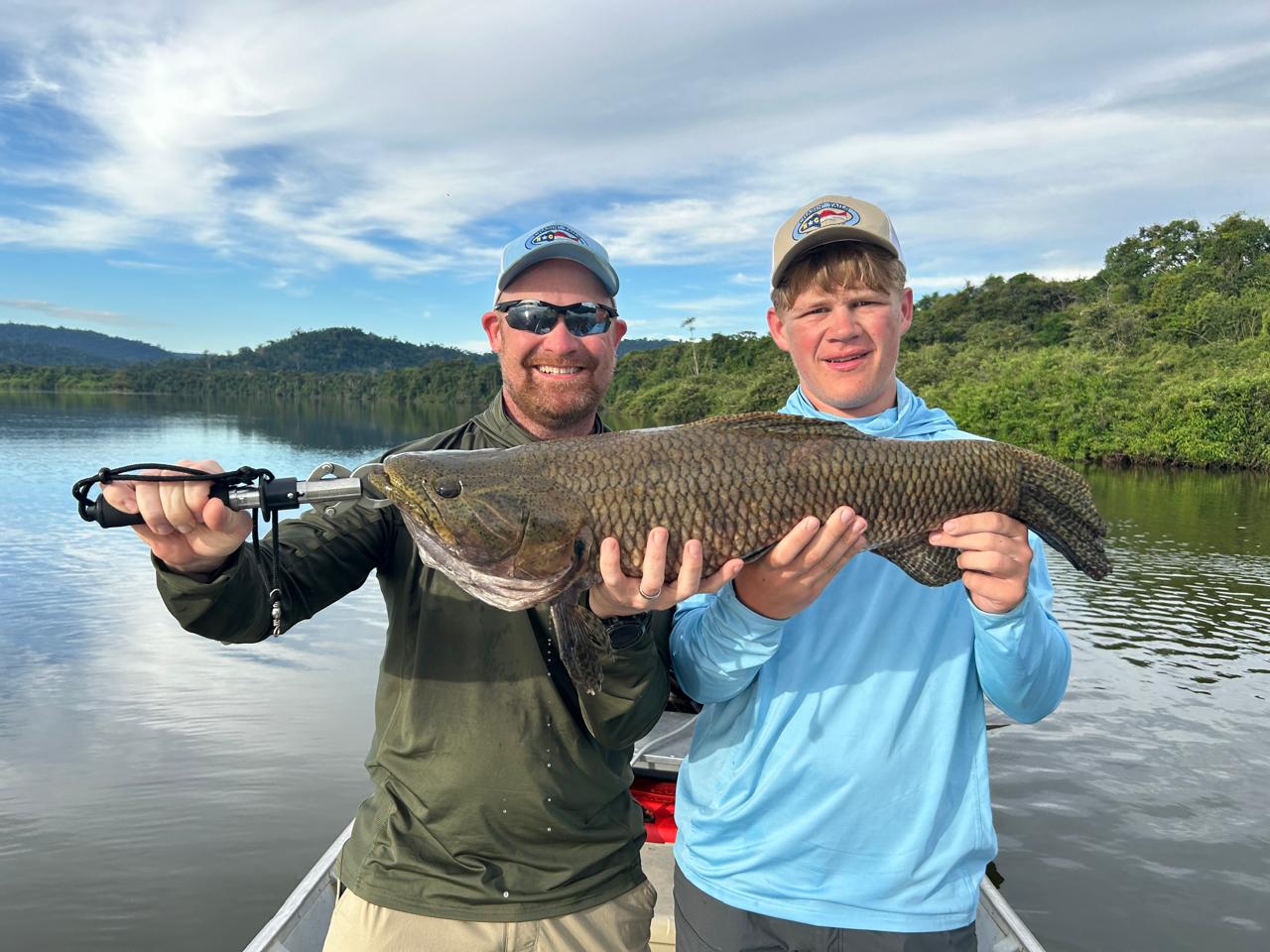
Common size is 5-20 lb range; true giants reach 30+ lbs
Prefers rocky-bottomed rivers with strong current, such as the Xingu and Tapajós
Fishing Tactics: How to Catch Wolf Fish
Wolf fish are ambush predators that strike violently when provoked. Strikes are sudden and explosive, and their teeth can destroy tackle—keep your fingers clear!
Recommended Techniques
Surface lures like prop baits, buzzbaits, and jumpin’ minnows are incredibly effective for both species—especially in low light or over submerged structure.
Trairões will hit large plugs and soft plastics worked near rocks and current breaks, while traíra favor slower retrieves in quiet backwaters.
In clear water, sight-fishing is possible.
The fish often lie in wait near submerged logs or undercut banks.
Suggested Gear
Rod/Reel: Medium-heavy to heavy baitcasting gear
Line: 50–65 lb braid with wire or heavy fluorocarbon leader
Lures: Prop baits, poppers, buzzbaits, spinnerbaits, big soft plastics
Fly Fishing: 8 wt rods with floating or intermediate lines. Use large streamers, poppers, and hairbugs.
Wolf Fish in Action
Related Reading
Join the Adventure
Want to experience the explosive strike of a wolf fish? Whether you’re hunting trairões in the wild, rocky waters of the Xingu or picking off traíras in quiet Rio Negro lagoons, Acute Angling has the trip for you.
Contact us today:
📞 (866) 832-2987
References
Oyakawa, O.T. & Mattox, G.M.T. (2009). Revision of Hoplias.
Vazzoler, A.E.A. (1996). Biologia da reprodução de peixes teleósteos.
Agostinho, A.A. et al. (2004). Estrutura trófica e conservação.
Ferreira, E.J.G., Zuanon, J. & Santos, G.M. (2007). Peixes comerciais do médio Amazonas.
Marcenik, V. & Hilsdorf, A.W.S. (2010). Genetic conservation of Neotropical fishes.
Zeinad, A. K. & Prado, R. A. (2012). Peixes fluviais do Brasil: espécies esportivas


